
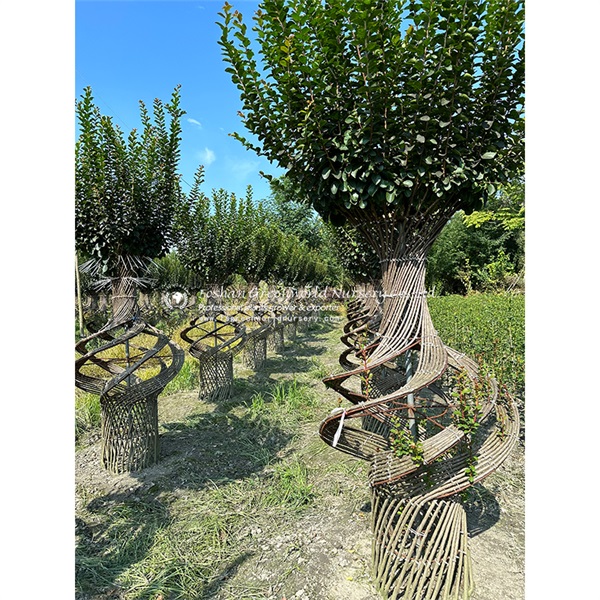
The Cassia tree, scientifically known as Lagerstroemia Indica, is a species of flowering plant in the family Lythraceae. It is native to the Indian Subcontinent, Southeast Asia, and northern Australia, and is widely cultivated for its ornamental value. The tree can grow up to 30 feet tall and has a spread of 25 feet, making it a substantial presence in any outdoor space.
The Tree Cassia is prized for its stunning display of bright yellow flowers, which bloom in clusters from late spring to early summer. The blossoms cover the entire tree, creating a breathtaking sight that is sure to capture the attention of anyone passing by. In addition to its beautiful flowers, the Cassia tree also boasts attractive, dark green foliage, adding to its visual appeal.
One of the most appealing aspects of the Tree Cassia is its versatility. It thrives in a range of soil types and can tolerate both drought and flooding, making it adaptable to various environmental conditions. This resilience has made it a popular choice for urban landscaping projects, as it can withstand the challenges of city life, such as pollution and compacted soil.
In addition to its aesthetic value, the Tree Cassia also provides several environmental benefits. As a flowering tree, it attracts pollinators such as bees and butterflies, supporting local ecosystems. Its foliage provides shade and helps to cool the surrounding area, making it a valuable addition to parks and residential neighborhoods. Furthermore, the tree's root system helps to prevent soil erosion, making it an ideal choice for stabilizing slopes and embankments.
When it comes to planting and caring for the Tree Cassia, there are a few key considerations to keep in mind. The tree thrives in full sun and well-drained soil, so it is important to choose a location that receives plenty of sunlight and has good drainage. Regular watering is essential, especially during the tree's early growth stages, to help establish a strong root system. Once established, the Tree Cassia is relatively low-maintenance and requires minimal pruning to maintain its shape and promote healthy growth.
In recent years, the popularity of the Tree Cassia has led to its inclusion in various landscaping projects and urban developments. In cities and towns around the world, the vibrant yellow blooms of the Cassia tree have become a defining feature of streetscapes and public spaces. Its ability to thrive in diverse environments has made it a valuable asset for enhancing the visual appeal of urban areas and bringing a touch of natural beauty to concrete jungles.
In conclusion, the Tree Cassia, with its stunning yellow blooms and adaptability to various climates, has become a favored choice for landscaping projects and urban developments. Its resilience, environmental benefits, and visual appeal have earned it a reputation as a versatile and valuable addition to outdoor spaces. Whether planted in parks, along streets, or in private gardens, the Tree Cassia is sure to make a striking impression and bring joy to all who encounter it. With proper care and maintenance, this beautiful flowering tree will continue to brighten landscapes for many years to come.