
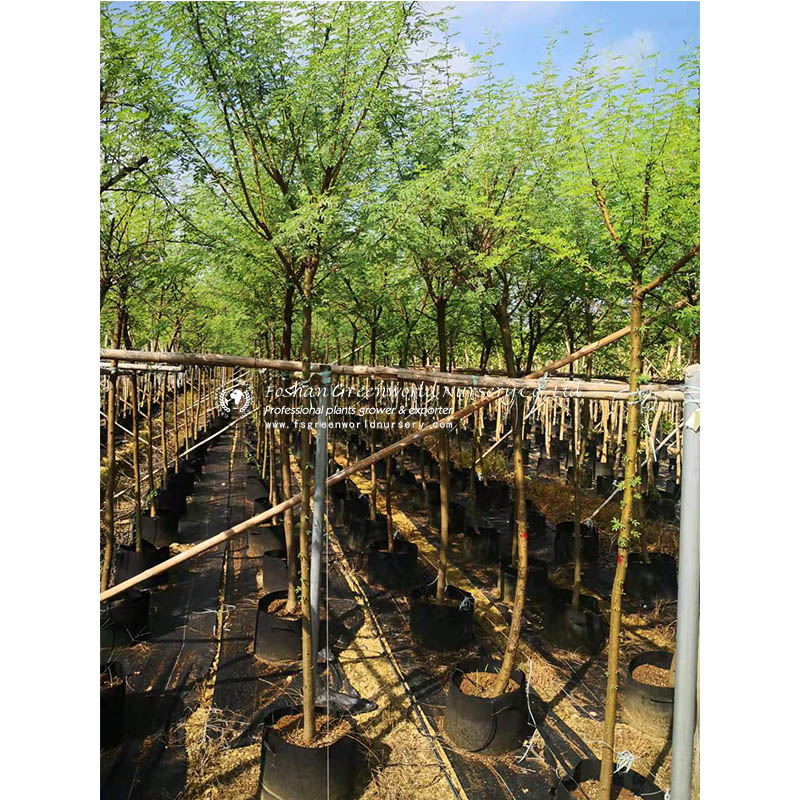
In recent years, urban greening has become a pivotal component of city planning and environmental management worldwide. The integration of diverse tree species in urban environments not only enhances the aesthetic appeal of cityscapes but also plays a critical role in improving air quality, providing shade, supporting biodiversity, and mitigating the urban heat island effect. Recent developments in urban forestry showcase a wide variety of tree species being utilized to revitalize public spaces, parks, and streetscapes, contributing to healthier and more livable urban environments.
A new wave of urban planting initiatives has highlighted the importance of selecting species that thrive in metropolitan conditions while delivering ecological and social benefits. Some of the prominent species making a significant impact in urban planting schemes include Lagerstroemia indica, Delonix regia, Hibiscus tiliaceus rubra, Pongamia pinnata, Albizia saman, Millingtonia hortensis, Ficus nitida, Peltophorum, Ginkgo biloba, Magnolia grandiflora, Photinia serrulata, Cinnamomum camphora, Prunus yedoensis, Trachycarpus fortunei, Tecoma stans, Wodyetia bifurcata, Sea grape plant, Ficus religiosa bonsai (Sacred Fig Tree), and Ficus racemosa.
**Key Species and Their Contributions to Urban Landscapes**
Lagerstroemia indica, commonly known as crepe myrtle, is highly valued for its vibrant flowers and adaptability to different soil types and climatic conditions. It blooms prolifically in summer, adding seasonal color and vibrancy to urban parks and streets.
Delonix regia, or the flame tree, is renowned for its spectacular red-orange flowers and expansive canopy. Apart from its ornamental value, it provides ample shade, making it a favorite for planting along boulevards and open public spaces.
Hibiscus tiliaceus rubra offers lush foliage and striking reddish flowers. Its adaptability to coastal and urban environments makes it suitable for both park landscaping and stabilization of soil in erosion-prone areas.
Pongamia pinnata is gaining recognition for its resilience and nitrogen-fixing abilities, contributing to soil fertility enhancement. It is often used in urban areas to improve air quality and support local ecosystems.
Albizia saman, known as the rain tree, is familiar for its broad, umbrella-shaped canopy providing excellent shade and habitat for urban birds and insects. This species also helps in carbon sequestration, mitigating urban pollution.
Millingtonia hortensis, sometimes called the Indian cork tree, is appreciated for its fragrant white flowers and fast growth. Its dense foliage also assists in noise reduction in bustling city environments.
Ficus nitida is frequently used for its remarkable aerial roots and dense canopy, contributing to both ornamental and ecological functions such as air purification and microclimate regulation.
Peltophorum species, characterized by their bright yellow flowers, bring a sunny disposition to urban greening projects and are often used in avenues or as street trees.
Ginkgo biloba, often termed a living fossil, is valued for its resilience against urban pollutants and distinctive fan-shaped leaves that turn a brilliant yellow in autumn, bringing seasonal interest.
Magnolia grandiflora presents large, glossy leaves and fragrant white flowers, making it a prized ornamental species in urban parks and gardens.
Photinia serrulata combines evergreen foliage with attractive red young leaves, enhancing the year-round greenery of urban spaces.
Cinnamomum camphora, or camphor tree, is noted for its aromatic leaves and shade-providing canopy, commonly planted in urban settings for its multipurpose uses including medicinal properties.
Prunus yedoensis, the Yoshino cherry, famously celebrated for its springtime blossoms, is an iconic species contributing to cultural events and tourism during flowering seasons.
Trachycarpus fortunei, commonly known as the windmill palm, introduces a tropical touch to cities, thriving even in temperate urban climates.
Tecoma stans, with its bright yellow trumpet-shaped flowers, attracts pollinators such as bees and butterflies, fostering urban biodiversity.
Wodyetia bifurcata, or the foxtail palm, is favored for its feathery fronds, adding texture and a tropical ambiance to urban landscapes.
The Sea grape plant provides dense foliage and edible fruits, making it a functional and ornamental choice along coastal promenades.
Sacred Fig Tree (Ficus religiosa bonsai) carries religious and cultural significance, often included in temple grounds and serene urban gardens for contemplation and spiritual value.
Ficus racemosa, with its tolerant nature and fruit-bearing potential, supports urban wildlife and promotes native biodiversity.
**Urban Forestry Programs Driving Sustainable Growth**
City governments and environmental organizations are increasingly adopting comprehensive urban forestry programs that incorporate these diverse species. By selecting native and adaptive trees, urban greening projects create habitat corridors for wildlife, improve stormwater management, and enhance community well-being.
For instance, the implementation of street tree planting initiatives using species such as Lagerstroemia indica, Delonix regia, and Albizia saman has led to measurable improvements in air quality and reductions in surface temperatures in several metropolitan areas. The shade provided by large-canopied trees like Ficus nitida and Millingtonia hortensis also reduces energy consumption in nearby buildings by lowering indoor temperatures.
Moreover, species such as Pongamia pinnata and Ficus religiosa bonsai are integrated into urban green corridors, supporting pollinators and contributing to urban agriculture efforts. The cultural importance of trees such as Prunus yedoensis and Cinnamomum camphora helps foster community identity and tourism around seasonal floral festivals and heritage preservation.
**Challenges and Prospects**
While the benefits are clear, urban tree planting faces challenges including limited planting space, soil compaction, pollution, and maintenance demands. Choosing resilient and locally adapted species combined with community engagement and proper management is crucial for the sustained success of urban greening efforts.
Advances in landscape planning and horticultural science continue to inform best practices, enabling cities to select species that maximize ecological functions while enhancing urban aesthetics. The growing inclusion of palms, flowering trees, and culturally significant species represents a holistic approach that balances environmental needs with social and cultural dimensions.
**Conclusion**
The integration of a diverse palette of tree species into urban environments represents a vital stride towards sustainable and livable cities. From the vibrant blossoms of Lagerstroemia indica and Delonix regia to the sturdy shade of Albizia saman and Ficus nitida, these trees provide beauty, ecosystem services, and cultural value. Through strategic urban forestry initiatives, cities are not only greening their landscapes but also investing in the health and well-being of their inhabitants, contributing to a greener, cooler, and more resilient urban future.