
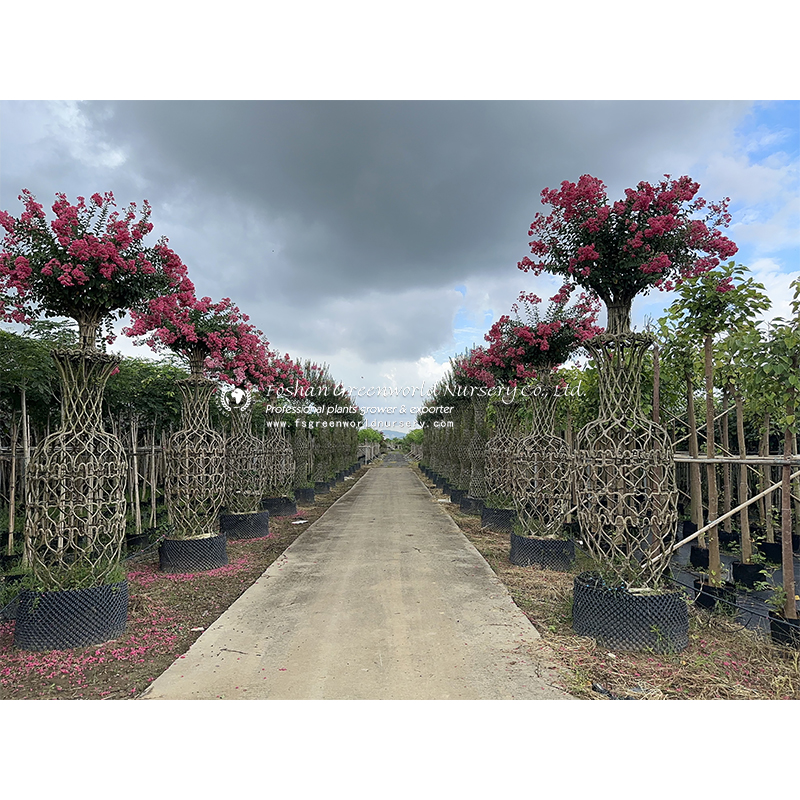
In recent years, urban landscapes have increasingly embraced the integration of greenery not only as an aesthetic enhancer but also as a vital component of environmental sustainability. Among the burgeoning variety of ornamental plants gaining popularity in cities, the Rhapis excelsa plant has stood out for its versatility, resilience, and air-purifying properties. Coupled with other notable species such as Lagerstroemia indica, Delonix regia, Hibiscus tiliaceus, and Ficus nitida, these plants are shaping the future of urban greening efforts worldwide.
**Rhapis Excelsa: A Staple in Urban Landscaping**
Commonly known as the lady palm, this plant has long been favored for indoor and outdoor decoration due to its manageable size and elegant fan-shaped leaves. It thrives in a wide range of light conditions, making it adaptable for homes, offices, and public spaces alike. Beyond its ornamental appeal, Rhapis excelsa serves an important environmental purpose by helping to filter indoor air pollutants, improving overall air quality.
The plant is well-suited for environments seeking low-maintenance yet effective greenery solutions. Its slow growth rate and tolerance to shade mean it requires minimal upkeep, making it particularly attractive for busy urban dwellers and municipal planting programs. Landscapers and interior designers frequently endorse Rhapis excelsa for its ability to complement various interior themes while adding a touch of natural tranquility.
**Diverse Plant Selection for Urban Environments**
Urban forestry and green space design have grown more sophisticated, favoring a variety of plants that can survive city conditions, provide shade, and support biodiversity. Alongside Rhapis excelsa, several other species have become integral to urban planting schemes:
- **Lagerstroemia indica (Crape Myrtle):** Known for its long-lasting summer blooms in vibrant pinks, purples, and whites, this deciduous tree adds dramatic color to streets and parks. It tolerates pollution and drought, making it a resilient choice for urban settings.
- **Delonix regia (Royal Poinciana):** Famous for its fiery red-orange flowers and broad, umbrella-like canopy, the Royal Poinciana provides substantial shade and visual impact, helping to cool urban heat islands.
- **Hibiscus tiliaceus (Sea Hibiscus):** With its large, heart-shaped leaves and striking flowers, this coastal shrub thrives in saline and sandy conditions, aiding in beach stabilization and beautification projects.
- **Ficus nitida (Indian Laurel Fig):** Valued for its dense foliage and rapid growth, this tree offers excellent shade and is frequently planted in parks and along streets to curb urban temperatures.
These plants, alongside many others such as Pongamia pinnata, Albizia saman, Millingtonia hortensis, Peltophorum, Ginkgo biloba, Magnolia grandiflora, and Camphor tree (Cinnamomum camphora), are crucial components in the effort to enhance city livability. Each species contributes uniquely, whether through nitrogen fixation to improve soil, provision of habitat for urban fauna, or simply by beautifying dull concrete jungles.
**Bonsai and Sacred Trees: Cultural and Environmental Significance**
Small-scale plants like bonsai varieties and species with cultural symbolism also play an important role. For instance, the Ficus religiosa, commonly known as the Sacred Fig, holds deep religious significance in many cultures and is often planted near temples and meditation spaces. Its presence in urban areas fosters cultural heritage in addition to environmental benefits.
Similarly, Ficus racemosa, another fig species, is appreciated for its ecological role in sustaining local wildlife, including birds and insects. Such plants bridge the gap between natural ecosystems and urban environments, encouraging biodiversity even in densely populated areas.
**Environmental Impact and Future Trends**
The comprehensive use of these plants within cities goes beyond beautification. Trees like Ginkgo biloba and Magnolia grandiflora are known to absorb carbon dioxide efficiently, contributing to carbon sequestration goals. Additionally, shade trees such as Tecoma stans and Trachycarpus fortunei help mitigate urban heat by lowering surface and air temperatures around buildings and streets.
In certain coastal cities, salt-tolerant species like Wodyetia bifurcata and the Sea Grape are instrumental in protecting shorelines from erosion, showcasing the multifunctional benefits of thoughtful urban planting.
Moreover, with growing awareness of mental health benefits derived from green spaces, these plants serve as natural stress relievers and promote outdoor activities among urban populations. Studies have shown that proximity to trees and parks correlates with reduced anxiety and improved overall well-being.
**Conclusion**
The integration of plants such as Rhapis excelsa and the extensive variety of ornamental and functional species helps cities worldwide move toward healthier, more sustainable environments. Their aesthetic appeal, environmental benefits, and cultural importance come together to create vibrant urban ecosystems.
Municipalities and private sector stakeholders alike are recognizing the need for carefully selected plantings that not only beautify but also support ecological balance, improve public health, and enhance community engagement with nature. As urban populations continue to grow, the prominence of these hardy, adaptable plants in city landscapes will only increase, heralding a greener and more livable future for generations to come.